Seattle Mayor’s Office Reviews Youth Peace Foundation Public Safety Frameworks

Seattle’s public safety conversation is moving from broad concern toward specific proposals, as the Youth Peace & Justice Foundation has provided violence-prevention, youth-safety and critical-incident response frameworks to the Office of Mayor Katie Wilson for review.
The Foundation said direct communication with the Mayor’s Office is now underway after Matt McIntosh, Interim Deputy Director of Community Relations, contacted the organization regarding its offers of public-safety support in Seattle. In response, the Foundation provided its original outreach, its STOPNOW School & Community Safety Patrols framework and its Critical Incident Stress Management and Acute Traumatic Stress Management framework, known as CISM/ATSM.
The Foundation has also invited the Mayor’s Office to take part in a telephone conference next week to discuss Seattle’s current needs, the materials provided and possible areas where the organization may be able to assist.
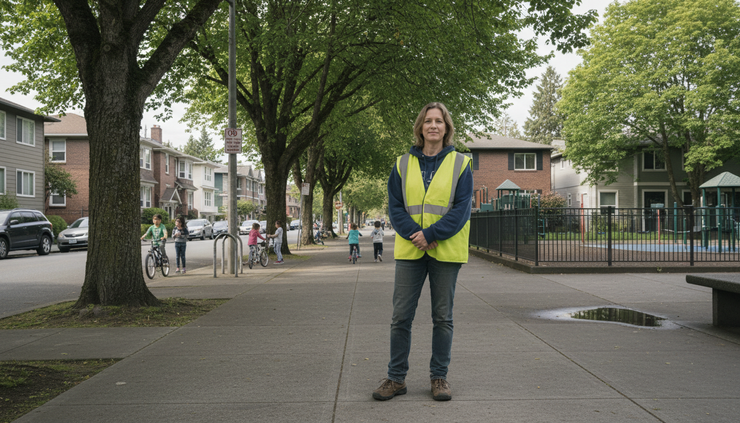
“We appreciate the Mayor’s Office reaching out,” said Daniel “Bodhi” Chapin, Founder and President of the Youth Peace & Justice Foundation. “Our goal is not to tell Seattle what it should do. It is to put practical resources and ideas on the table and have a conversation about what may actually be useful to the community.”
The Mayor’s Office has received two public safety frameworks
The materials provided by the Youth Peace & Justice Foundation focus on two parts of public safety that often overlap but require different kinds of response.
One framework, STOPNOW School & Community Safety Patrols, centers on prevention. It proposes the use of screened and trained volunteers to create a visible, positive presence in schools and community spaces. The idea is to observe, report concerns, engage respectfully with young people and community members and help connect people with appropriate resources.
The other framework, CISM/ATSM, focuses on what happens after a crisis. Critical Incident Stress Management and Acute Traumatic Stress Management are designed to help communities respond to the emotional and psychological impact of serious incidents. These approaches are not a substitute for emergency services, licensed clinical care or law enforcement investigations. They are meant to support stabilization, communication and referral after traumatic events.
Together, the materials point to a broader question facing Seattle and other cities: how can city government, schools, community groups and response systems work in a more connected way before and after violence occurs?
The Foundation’s outreach does not describe a finalized agreement with the city. At this stage, the key development is that the Mayor’s Office has made contact and the Foundation has put specific frameworks forward for review and discussion.
STOPNOW focuses on prevention before a crisis escalates
The STOPNOW School & Community Safety Patrols proposal is built around a simple premise. Some safety concerns can be identified earlier when trained adults are present, observant and connected to the community.
According to the Foundation’s description, STOPNOW patrols would rely on screened and trained volunteers. Their role would not be to act as police officers or replace school staff. The proposed role is more limited and community-centered.
The framework includes several core functions:
Providing a positive presence in areas where young people and families gather
Engaging with youth and community members in a respectful way
Observing and reporting concerns before they grow
Helping connect people with appropriate services and resources
Supporting communication between community safety efforts and institutional systems
This type of model depends heavily on training, boundaries and trust. Volunteers would need clear rules about what they can and cannot do. They would also need guidance on when to report concerns, when to step back and when to call official responders.
That distinction matters. Community-based prevention efforts can lose trust if participants appear to monitor or control residents without accountability. They can also fail if volunteers are placed into situations that require professional intervention.
The Foundation’s framing suggests a support role rather than an enforcement role. That focus may be part of why it is presenting the model as a possible bridge between city and school safety efforts.

CISM and ATSM address the aftermath of serious incidents
The Foundation’s second framework, CISM/ATSM, addresses a different moment in the safety cycle: the period after a critical incident.
A serious act of violence can affect far more people than those directly involved. Classmates, families, witnesses, teachers, neighbors, responders and local businesses may all experience shock, fear, grief or confusion. In those early hours and days, communication gaps can deepen the harm.
Critical incident response frameworks are often used to help communities organize support after traumatic events. The Foundation’s CISM/ATSM materials were provided to the Mayor’s Office for review as part of its broader offer of public-safety support.
A practical post-incident framework may involve several areas of work:
Helping people understand what support is available
Supporting calm, clear communication after a crisis
Identifying people who may need further help
Referring individuals to appropriate professional care
Coordinating with existing school, city and community systems
The Foundation’s proposal appears to place trauma response alongside prevention. That pairing is significant because cities often treat these areas separately. Prevention teams may focus on youth outreach and patrols, while crisis response teams may focus on events after harm has already occurred.
Seattle’s current discussion gives the city and the Foundation a chance to examine whether those efforts can be connected in a practical way.
Any use of CISM or ATSM would need careful coordination with qualified professionals, emergency responders, school leaders and mental health providers. The value of such a framework depends on clear roles, careful training and a commitment to avoid doing harm during moments of high stress.
The Foundation says its Seattle work predates the recall discussion
The Youth Peace & Justice Foundation said its involvement in Seattle predates the current recall discussion.
The organization pointed to its earlier response after the 2024 killing of Mobarak Adam. Following that killing, the Foundation proposed its STOPNOW Community Safety Patrols as a community-based prevention effort.
That earlier proposal included many of the same principles now being discussed with the Mayor’s Office: screened and trained volunteers, a positive community presence, engagement with young people, observation and reporting and connections to appropriate resources.
By emphasizing this timeline, the Foundation is positioning its current outreach as part of an ongoing public safety effort rather than a response to a single political event. The distinction may matter in a city where public safety debates can quickly become tied to electoral pressure, public criticism or high-profile conflict.
The Foundation’s message is that its Seattle involvement began with concern over community violence and youth safety, not with the recall discussion.
That does not remove politics from the broader environment. Public safety in any major city is linked to public trust, leadership, accountability and budget choices. But the Foundation’s statement places its offer in a longer context.

The proposals seek to connect city and school safety efforts
The Foundation’s stated goal is to connect city and school safety efforts. That is a practical focus because youth safety rarely fits neatly inside one system.
A student may experience conflict online, on a bus, outside a school, at a park, in a neighborhood business district or at home. A concern noticed by a community member may relate to a school issue. A school incident may spill into the surrounding neighborhood. A city response may need information from educators, families or youth workers.
That is why prevention frameworks often depend on relationships more than paperwork. If people do not know who to call, how to report concerns or what will happen next, early warning signs may be missed.
A connected approach could help clarify several questions:
Public safety need | Why coordination matters |
Youth outreach | Young people move between schools, homes and public spaces, so support cannot stop at one property line. |
Concern reporting | Volunteers, school staff and city responders need a clear path for sharing urgent and non-urgent concerns. |
Crisis response | After violence, families and communities need accurate information and access to support. |
Resource referrals | Prevention work is stronger when people can connect youth and families to real help. |
The Foundation’s frameworks do not answer every operational question. They do provide a starting point for discussion about where community volunteers might fit, how training would work and what safeguards would be needed.
Key questions remain before any public role is defined
Direct communication with the Mayor’s Office is an early step. Before any framework could be used in practice, Seattle officials and community partners would likely need to examine several details.
The first is scope. A community safety patrol can mean different things in different contexts. The city would need to understand where volunteers might operate, what they would do during routine activity and how they would respond if they saw a serious concern.
The second is training. Volunteers working around youth, trauma and safety concerns need more than good intentions. They need preparation in de-escalation, mandated reporting rules where applicable, cultural awareness, youth engagement, emergency procedures and boundaries.
The third is accountability. Any public-facing safety effort needs a way to handle complaints, review conduct and remove participants who do not meet standards.
The fourth is coordination. STOPNOW and CISM/ATSM would need to fit with existing city services, school district policies, emergency response systems and community-based organizations already doing related work.
The fifth is community trust. Programs that affect young people and public safety must earn trust from families, students, neighborhoods and those most affected by violence. That trust cannot be assumed. It has to be built through listening, transparency and follow-through.
None of these questions make the proposals impossible. They define the work that would have to happen before any concept moves from review to implementation.

What happens next
The Foundation has invited the Mayor’s Office to join a telephone conference next week. The stated purpose is to discuss Seattle’s current needs, review the proposed frameworks and identify areas where the Foundation may be able to assist.
That meeting, if it occurs, would likely shape whether the conversation remains exploratory or moves toward a more formal review.
For now, the main development is clear: the Seattle Mayor’s Office has responded to the Youth Peace & Justice Foundation’s offer of public-safety support, and the Foundation has provided specific frameworks for consideration.
The next step is not a public launch or a final policy. It is a conversation about fit, need, responsibility and trust.
If Seattle chooses to examine these ideas further, the strongest test will be practical. Do the frameworks help people prevent harm? Do they support youth without criminalizing them? Do they help communities respond to trauma with care and clarity? Do they connect existing systems rather than compete with them?
Those are the questions that will determine whether the proposals become useful tools or remain documents under review.


