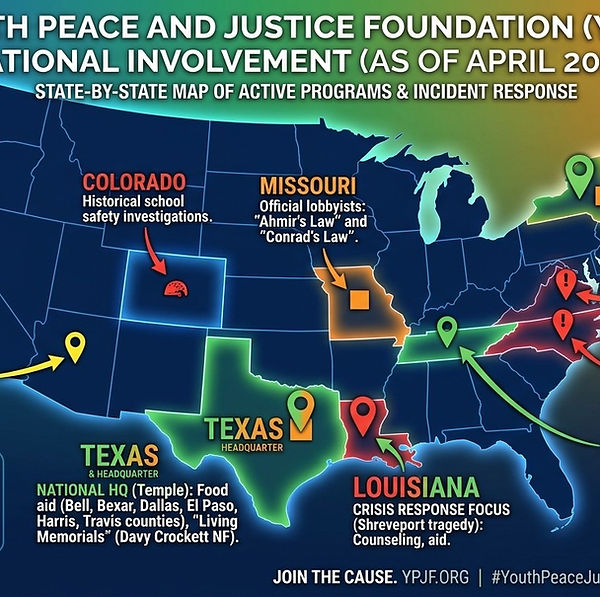

Youth Impact Initiative: A Collaborative Peace and Justice Initiative
- null null
- Oct 20, 2025
- 2 min read
Youth Impact Initiative: A Collaborative Peace and Justice Initiative
Project Goal
The core goal of the Youth Impact Model Initiative is to address the root causes of conflict in a community by fostering sustainable collaboration, shared understanding, and collective impact among diverse young people.
We aim to to move beyond competitive, single-issue, responsive approaches, while advocating for and creating community change, by emphasizing shared leadership and meaningful solutions identified by the youth themselves under the direction of our programming.
Project Components
The model is built around a two-phase process led entirely by a cohort of Youth Leaders drawn from diverse community backgrounds, including varied socioeconomic, cultural, and geographic groups.
Phase 1: Joint Conflict Analysis
Youth Leaders collaboratively conduct a community-wide analysis of the conflicts and underlying systemic issues affecting their area. This action is crucial for establishing a shared, data-driven understanding of the issues, which moves past individual-group perspectives to identify intersecting systemic root causes that often fuel local tensions.
Phase 2: Joint Problem-Solving and Community Action
Following the analysis, the leaders work together to design and implement collaborative solutions. This joint problem-solving phase ensures that the projects are directly aimed at the identified root causes and demonstrate the power of collective impact in creating sustainable change.
Examples of Collaborative Actions
The collaborative solutions funded through this model may take many forms, with an emphasis on building bridges and fostering dialogue:
Community Forums: Youth Leaders organize and moderate forums to encourage open dialogue and shared understanding across different community groups.
Art Projects: Creative mediums are used to express personal stories and foster empathy, such as designing joint community murals or producing collaborative theatre pieces.
Skill-Building Workshops: The leaders create and lead peer-to-peer workshops focused on essential skills like non-violent communication and practical conflict resolution.
Shared Initiatives: Projects involve youth working together toward a common goal, such as developing a community garden, leading a neighborhood cleanup effort, or organizing a local advocacy campaign for peace and justice issues.
Resource Allocation and Outcome
The Foundation provides funding directly to these collaborative efforts to communities nationwide, while equally creating like programming. A key principle is that the Youth Leaders within communities, schools, etc., determine the necessary costs and are responsible for collectively using the funds to execute their shared initiatives.
Ultimately, the initiative seeks to create more sustainable and meaningful solutions to peace and justice issues identified by the youth themselves, demonstrating that emphasizing collaboration leads to a stronger and more lasting outcome than funding fragmented, competitive projects.
For more information on the Youth Impact Model, please CONTACT the foundation.


